
The Formalwear Binary

At all the weddings I’ve been to and can remember, I have worn pants. At the next wedding I will attend, I will also wear pants. This is not groundbreaking. However, I bought the pants without a matching shirt, as they are vintage, so I have been on the hunt for a suitable top. First, I narrowed down my color palette: light orange, pale green, lilac or light brown should all be fine. Then, I asked myself what an appropriate top would look like or even be called, and started running into trouble. So I turned to wedding websites to tell me what to do. And, apparently, wedding websites have no fucking clue.
The wedding, which is four months away (yes, a long time, but finding pieces of an outfit vintage takes eons), has a helpful dress code of semi-formal. I find that one benefit of the wedding industry is that the dress codes are literally codes with direct translations into clothing options, making it easier to find suitable clothes. (The downside, of course, is that the wedding industry uses that to make every person spend as much as possible.) So, I looked up suitable semi-formal clothing. And the options are dresses or suits. Only dresses or suits. I understand that these are the only options for black tie weddings. However, in formal, cocktail or semi-formal dress codes, it is implicit that a non-dress, non-suit option is appropriate. Let’s call them “third options.” Third options are not listed on wedding dress code sites at all. I naïvely searched for nonbinary wedding formalwear advice. Oh dear! Apparently, if you have curves, you can wear a suit, and if you don’t, you can wear a dress. Great, thanks. That advice is quite literally binary, and so idiotic that I gained clarity on the fact that the fashion industry and the wedding industry are separate entities. After my internet searching, I decided that the style guides for weddings were not going to provide me with answers. Semi-formal was just going to have to mean whatever I decided.
So I considered what my wedding attire was in the past. When I was twenty five, there was no dress code (“wear what you feel comfortable in”) at my friend’s wedding, so I wore a second-hand shirt with a pair of wide Uniqlo pants. When I was nine, I had no idea what the dress code was, but I had been asking my mom if I could have an outfit from one of the sari stores in our neighborhood since I could write (photo evidence below), so she finally relented. We did not get a sari, but a two piece yellow set. But can you blame little me for wanting a sari? Princesses were in books and movies, and then in real life, I saw people wearing gorgeous outfits with long skirts and flowing sashes, embroidered with silver and gold. It would be stupid not to want one as a kid.
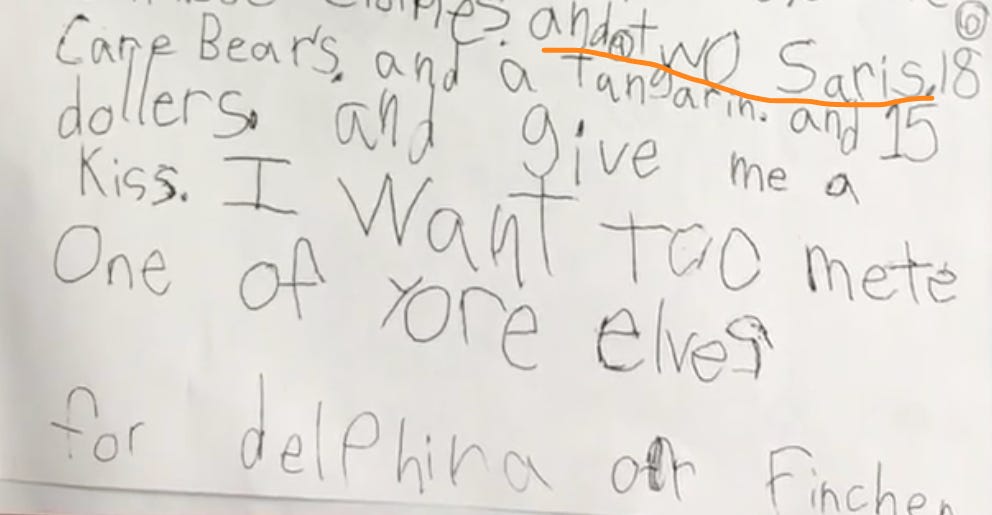
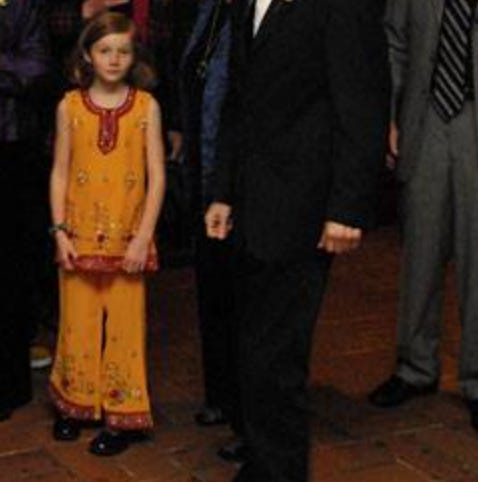
I wouldn’t do either of these outfits again, so the inspiration I gained from this retrospective was negligible. So, I tried every search term in the book, from materials (silk, linen) to details (side tie, wrap) to silhouettes (asymmetric, structured). Eventually this led to a handful of brands, which had cool, formalwear which wasn’t too gendered, but their clothes were around 200 a piece and were in muted colors which would make me look like a prisoner if I wore them in May. If I need formalwear for a wedding in a brutalist ruin, will look up these brands on Vinted.
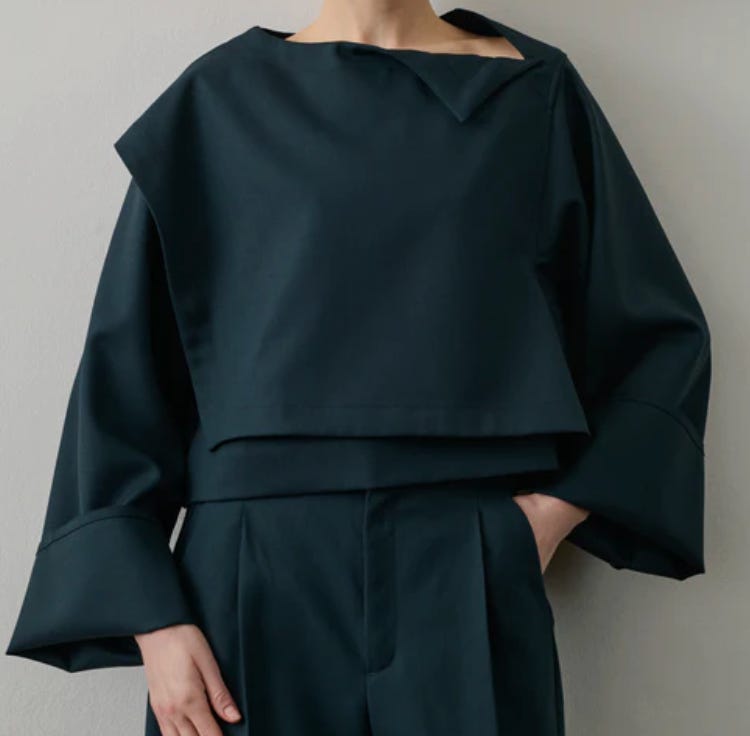
At one point, I searched for a cropped shirt (my pants are high waisted), and found myself on an Indian website, as saris actually are some of the few formalwear options with cropped shirts. Google noted this data and eventually every search started offering up online shops based in India, regardless of what I had searched. Since the wedding culture in India is bigger on all fronts, there is a lot out there. And there are differently gendered styles, so many third options beyond the suit-dress binary. What I’m saying is: six year-old me was onto something. I found some very fitting clothes and brands, but won’t be buying any until the EU-India free trade agreement comes into effect, since I’m not going to add import duties to my clothing budget.
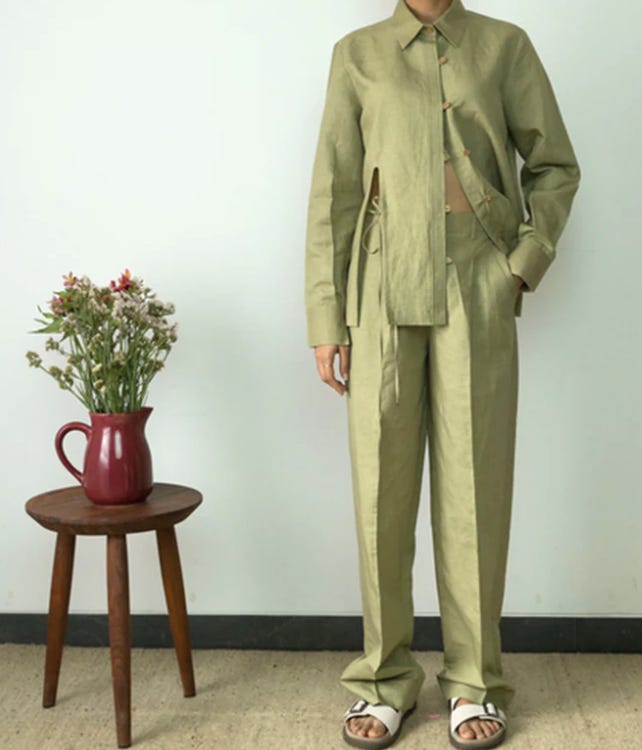
I take inspiration from gender neutral or masc style influencers, such as Percia of percish on instagram. While both do streetwear, Percia recently had a wedding and attended weddings, so I studied her advice. For her wedding outfit, Percia first found a pear of vintage pants and then lugged them around to shops to find a suitable top. This feels like a proper amount of effort if it is your own wedding and you are a style influencer, but for me it seemed like too much. Then I tried it and after 4 shops, found a shirt in my budget! The problem was, the shirt was quite flowy, had a collar and was butter yellow, which is almost white. Could I wear this without a formal jacket? Is light yellow too white? I needed androgynous wedding attire advice, but the internet had left me high and dry. Also, in the past, weddings I’ve attended had an average of 1.75 brides and this coming wedding has 0 brides, so I don’t know how non-white my clothes have to be (see post script). I am still on the fence about finding a jacket to finish my outfit, so I will just let the gods of second-hand shopping decide that for me.
What I’ve learned, on this search is that if you want to wear pants to someone’s wedding, you must be willing to wear a suit or else spend hours brainstorming. There is no easy option for formal tops that aren’t basic. No Reformation exists for non binary people, there is only the abyss with a half dozen brands at the bottom. You are only going to find a third option if you open your third eye and invent it yourself.
P.S.: The mother of all weddings, one at which I’d have liked to be a fly in the wall taking in the beauty of it all, was a fashion designer’s wedding. When Jacquemus got married, it took over my social media feeds despite not following him, and I was happier for it. Jacquemus’ runway shows are unbelievably gorgeous, and his wedding was like a runway show leveled up. His husband wore an all white suit, which normally would mean that no one else should wear all white, but the opposite was the case. Both of the couple’s mothers (I think) walked each of them to the “altar” (below) in long white dresses. Most of the women in attendance also wore white dresses to the ceremony, which I assume were Jacquemus designs. At the dance in the evening, everyone was given a white wedding dress to dance in, regardless of gender.